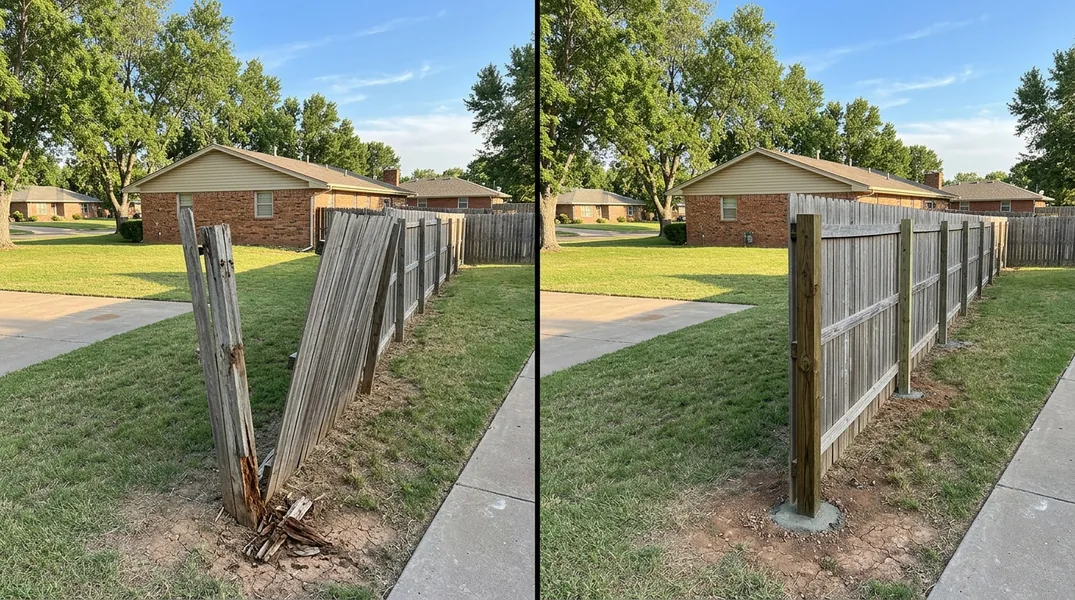
The Wichita Fence Problem: Why Your Fence Leans
If you own a home in Wichita, you've probably noticed a leaning fence at some point, either on your property or a neighbor's. It's one of the most common fence complaints we hear, and for good reason. Wichita's unique climate and soil conditions create a perfect storm for fence problems that homeowners in other parts of the country rarely face.
A leaning fence isn't just an eyesore. It's a sign that something structural is failing beneath the surface. Whether it's a single section or an entire run of fencing, a lean indicates that the posts supporting your fence have shifted, weakened, or settled unevenly. The longer you wait to address the problem, the worse it becomes. What starts as a minor tilt can eventually lead to a fence that falls over completely, creating safety hazards and costly repairs.
Wind Load: Wichita's Invisible Fence Enemy
Kansas is famous for wind, and Wichita sits right in the heart of wind country. Spring storms and winter weather systems regularly bring sustained winds that test the structural integrity of fences. Wind load, the force exerted by wind pressure on a vertical surface, is one of the primary reasons fences lean in this region.
When wind hits a fence, it exerts lateral pressure on the posts. If those posts aren't set deep enough, anchored firmly enough, or if the concrete around them has deteriorated, the posts will shift slightly with each gust. Over months and years, these small movements accumulate. The post gradually tilts, and the entire fence section follows. A fence that was plumb and straight in the spring may be noticeably leaning by summer.
The problem is compounded if your Wood & Privacy Fence Installation was done improperly. Posts that were set only 24 inches deep instead of the recommended 30 to 36 inches are far more susceptible to wind-induced movement. Similarly, posts set in soil alone without concrete are virtually guaranteed to shift over time.
Expansive Clay Soil: The Hidden Threat Beneath Your Fence
If there's one geological feature that defines the Wichita area, it's expansive clay. This soil type is found throughout Kansas and Oklahoma, and it behaves very differently from the sandy or loamy soils found in other regions. Expansive clay swells when it absorbs moisture and shrinks when it dries out. These volume changes are significant and relentless.
During wet seasons, clay soil expands, pushing against fence posts and creating upward pressure. This heaving can lift posts out of the ground or crack the concrete around them. When dry seasons arrive, the soil contracts, creating voids and allowing posts to settle unevenly. A post might be perfectly vertical in spring, but after a dry summer, it's settled several inches and is now leaning.
This cycle repeats year after year. Each expansion and contraction cycle weakens the post's foundation and loosens the concrete around it. Eventually, the post becomes unstable and begins to tilt. Homeowners often notice fence leaning after winter, which is the direct result of this soil movement combined with freeze-thaw cycles.
Rotted Posts: The Silent Structural Failure
Even if wind and soil movement aren't the primary culprits, wood fence posts in Wichita are constantly under attack from moisture and decay. Wood naturally absorbs water, especially at ground level where the post meets soil and concrete. When wood stays damp, it becomes an ideal environment for rot and fungal growth.
A rotted post loses its structural strength. What was once solid wood becomes soft, spongy, and compromised. The post can no longer support the weight and wind pressure of the fence panels. It begins to lean, and the lean accelerates as more of the post decays. If the rot is severe enough, the post may snap or collapse entirely.
The problem is that rot often develops hidden from view. The exterior of the post may look fine while the interior is severely compromised. By the time you notice a fence leaning, the rot may have been progressing for months or even years. This is why fence post replacement is often necessary rather than repair.
Leaning Fence Repair vs. Replacement: When to Call a Professional
Not every leaning fence requires complete replacement. Sometimes, leaning fence repair is possible if the damage is caught early and the underlying cause can be addressed. However, the decision depends on several factors: the extent of the lean, the age of the fence, the condition of the posts, and the root cause of the problem.
If a single post has rotted but the fence is otherwise in good condition, a fence post repair or replacement of that one post may be sufficient. A professional can remove the damaged post, set a new one in concrete at the proper depth, and restore the fence to its original condition. However, if multiple posts are affected or if the lean is severe, the entire section or fence may need to be replaced.
This is where professional assessment becomes critical. The team at Wichita Fence Company can evaluate your fence, identify the cause of the lean, and recommend the most cost-effective solution. Sometimes what looks like a simple lean is actually a symptom of a larger structural problem that won't be solved by a quick fix. A professional inspection ensures you're not wasting money on temporary repairs when replacement is the better long-term choice.
Wood & Privacy Fence Installation Cost in Wichita: What to Budget
If your fence requires replacement, understanding the pricing for Wood & Privacy Fence Installation in Wichita will help you plan your budget. The cost of fence installation depends on several variables: the length of the fence, the height, the type of wood, and the condition of the existing posts and concrete.
Replacing a fence in the Wichita area typically costs between $25 and $50 per linear foot for wood fencing, though this can vary based on materials and site conditions. If old concrete needs to be removed and disposed of, or if the soil is particularly challenging to work with, costs may be higher. The good news is that a properly installed fence, with posts set deep in concrete and constructed to withstand Wichita's wind and soil conditions, will last 15 to 20 years or more.
Rather than guessing at costs, the best approach is to request a free estimate from a local fence company. Wichita Fence Company offers transparent pricing and can provide a detailed quote based on your specific project. Call (316) 710-7662 to schedule an assessment and learn exactly what your fence repair or replacement will cost.
Preventing Future Fence Leaning: Best Practices for Wichita Homeowners
Once you've repaired or replaced your fence, you'll want to prevent the same problems from recurring. The key is ensuring that your fence is installed correctly from the start, with an understanding of Wichita's unique environmental challenges.
Posts should be set at least 30 to 36 inches deep, or deeper in areas with expansive clay. The concrete around each post should be properly compacted and should extend at least 8 inches above ground level to help shed water away from the base of the post. For Wood & Privacy Fence Installation, using pressure-treated lumber rated for ground contact is essential. Regular maintenance, including sealing or staining the wood every few years, helps prevent moisture absorption and rot.
Additionally, monitor your fence for early signs of trouble. A slight lean or a wobbly post is a warning sign that shouldn't be ignored. Catching problems early makes repairs easier and less expensive. If you notice your fence leaning or any posts feeling unstable, contact Wichita Fence Company right away at (316) 710-7662 or request a free estimate online. Early intervention can save you thousands in replacement costs down the road.
Looking for a professional tree service in Wichita? Wichita Fence Company responds fast for all your fence needs.
Get a Free Quote