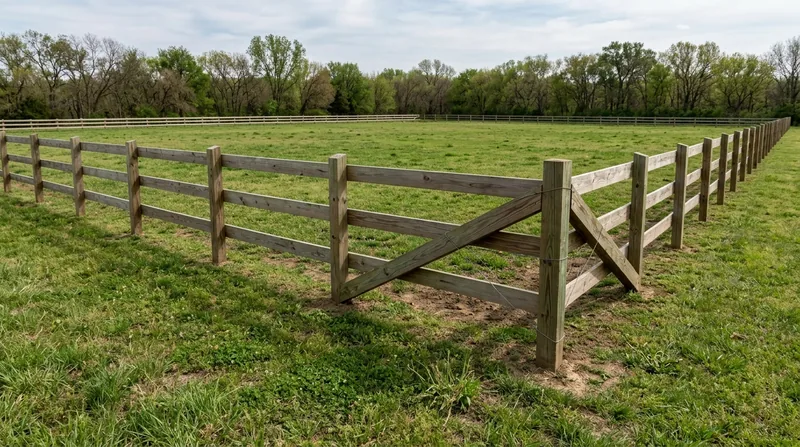




Farm fence installation in Wichita means building the right barrier for livestock, equipment access, and the working reality of acreage in Sedgwick, Butler, Sumner, and Harvey counties. Whether you run cattle, horses, or simply need a durable perimeter for pasture or field, the fence has to hold pressure, withstand weather, and last years without constant repair. Wichita Fence Company has built ranch and field fencing since 2014 for property owners across the metro and surrounding counties, from small hobby operations in Andover and Haysville to working ranches near Maize and Goddard. We work from your site plan, understand what has to move through the gate, and build to the animal and equipment load you actually run. This guide covers the methods we use, the costs you should expect, and how to choose the right approach for your acreage.
Why Farm and Ranch Fencing Matters in Greater Wichita
Acreage around Wichita demands fencing that does more than look neat. A field fence holds livestock in place, keeps predators and strays out, and frames the entry and exit points for feed, equipment, and emergency access. Posts set loose or rails spaced wrong fail within a season or two under real animal pressure. Proper spacing, concrete footings, and the right material for your terrain and herd type are the difference between a fence that works and one that becomes a liability.
- Ranch rail fencing provides visibility and airflow while containing livestock with proven durability across acreage.
- No-climb horse fence (woven wire with closer mesh) prevents hooves and heads from catching and reduces injury risk.
- Field wire and split rail combination balances cost and containment for larger pastures and mixed-use property.
- Pipe fencing offers strength for high-traffic gate areas and equipment lanes where standard wood would flex or split.
- Barbed wire, where permitted and appropriate, adds a cost-effective secondary layer for cattle containment on larger operations.
Each method serves a different purpose, and mixing them across a property is common and smart.
Key info: Wichita-area property owners in master-planned communities and some townships must verify height and material rules with the local building department before installation. Deed restrictions and HOA architectural standards often apply even on acreage. We work from your existing survey and install on the line you identify. A licensed land surveyor determines property boundaries; we do not.
For guidance on local permitting and setback rules, contact the City of Wichita Planning Department or your county office. Kansas 811 utility locates are required by law before you dig any post hole, and we arrange them as part of our process.
How We Build Farm and Ranch Fencing in Wichita: Our Process
We start with a site walk. You tell us what animals or equipment will be on the property, how much pressure the fence will see, and where gates need to be. We measure the fence line, identify post locations, and propose the material and spacing that will hold up. Once you approve the plan and we've called 811 for utility locates, we set posts in concrete (not tamped) at proper depth and spacing, add rails or wire, and brace high-load areas to prevent sagging. Gates are hung with self-closing hardware where appropriate, and we test everything before we leave the site.
- We conduct a site walk to understand your livestock type, equipment access, and long-term use of the property.
- We measure the fence line, mark post locations, and propose material and spacing for your specific animal load.
- We call Kansas 811 for utility locates and wait for clearance before digging any post holes.
- We set posts in concrete at the depth and spacing required for your soil and the fence type you choose.
- We install rails, wire, or panels, add anti-sag bracing where needed, and hang and test all gates.
The result is a fence that works for your operation, not a generic installation.
Example: A property owner in Valley Center with five horses and a working gate needed no-climb fencing for safety and a pipe-and-rail combination at the main entrance to handle equipment traffic. We built the pasture perimeter with 4-inch mesh horse fence set to 48 inches, added pipe at the gate opening with self-closing hinges, and set corner posts with diagonal bracing. The result held up through two seasons with no sagging or damage.
For details on our full range of gate installation and repair services, including automatic driveway gates for ranch entries, visit our gates page.
Farm and Ranch Fencing Methods: What Works Best
| Approach | Description | Best for |
|---|---|---|
| Split Rail | Solid wood rails in a 2x4 or 3x4 profile, typically 3 or 4 rails high, set in concrete posts spaced 8 feet apart. | Hobby farms, decorative perimeter fencing, and cattle operations where visibility and airflow matter more than maximum containment. |
| No-Climb Horse Fence | Woven wire with 2x4-inch or smaller mesh, typically 48 to 60 inches high, set to concrete posts spaced 6 feet apart for strength. | Horse and small-livestock pastures where safety and hoof/head entanglement prevention are critical. |
| Field Wire and Rail | Combination of wire mesh (usually 4 or 6-inch) with 1 or 2 top rails for reinforcement, set to concrete posts 8 to 10 feet apart. | Large pastures, mixed-use property, and operations where cost efficiency and containment are balanced. |
| Pipe Fencing | 2-inch or 2.5-inch galvanized steel pipe welded or bolted to steel posts, typically 2 or 3 rails high, spaced 8 to 10 feet apart. | High-traffic gate areas, equipment lanes, and heavy-use perimeters where wood would flex, split, or fail under pressure. |
| Barbed Wire | High-tensile wire strung on wood or pipe posts, typically 4 to 6 strands, spaced 4 to 6 feet apart vertically and 8 to 12 feet horizontally. | Cattle operations, large perimeter fencing, and secondary containment where cost per linear foot is the primary concern. |
The right choice depends on your animal type, the property size, how much pressure the fence will see, and your budget. We often recommend combining methods: split rail or pipe for the visible and high-traffic areas, field wire or barbed wire for the perimeter.
Farm and Ranch Fencing Cost in Wichita: What to Expect
Farm and ranch fencing costs start at roughly $10 per linear foot for basic split rail or field wire on a straightforward property with good access and standard post spacing. A 500-foot perimeter on a property in Goddard or Maize with no obstacles might run $5,000 to $7,500 depending on material. Costs move up with smaller post spacing (required for horses or high animal pressure), terrain that makes digging harder, gates, and site-specific factors like rocky soil or dense vegetation.
Pipe fencing and no-climb horse fence run higher because of material cost and the precision required for welding or tensioning. A 300-foot no-climb pasture enclosure can easily reach $6,000 to $9,000. Barbed wire is the most economical for large perimeters but requires proper tensioning and maintenance knowledge.
The best way to get an accurate number is to have us walk your property, understand your animal type and use, and give you a detailed estimate. We provide free estimates within 24 hours and can walk you through why one approach costs more than another. For a full breakdown of our pricing across all fence types and services, visit our pricing page.
Get a free, no-obligation estimate by calling (316) 710-7662 or contacting us online.
Farm and Ranch Fencing Near Me: What Wichita Homeowners Should Know Before Hiring
When you're looking for someone to build your farm or ranch fence, start by checking that the contractor is fully insured and can show proof of coverage. Ask for references from recent jobs in your area. Wichita Fence Company is an AFA Member Installer (American Fence Association) and has been in business since 2014, which means we know the regional terrain, local permitting, and what holds up over time.
Get at least two estimates so you understand the range and why costs differ. Ask each contractor to explain their post spacing, how they handle concrete footing, and what warranty or guarantee they offer. If your property is in an HOA or master-planned community, verify that the fence material and height meet architectural standards before work starts. For acreage outside city limits, check with the county on any setback or height rules that might apply.
Finally, make sure the contractor calls Kansas 811 for utility locates before digging. This is the law, and it protects you, the contractor, and underground utilities. A reputable local fence company will make this part of the process without asking.
Ready to discuss your farm or ranch fencing project? Call us at (316) 710-7662 or request a free estimate. We serve Wichita, Derby, Andover, Haysville, Park City, Valley Center, Maize, Goddard, and surrounding areas.
Farm & Ranch Fencing in Wichita: Pricing Guide
| Service | Price | Details |
|---|---|---|
| Split Rail Fencing | Starting at $10/ft | Solid wood rails in concrete posts, 3 to 4 rails high, spaced 8 feet apart for standard pasture use |
| No-Climb Horse Fence | Starting at $15/ft | Woven wire mesh with 2x4-inch or smaller opening, 48 to 60 inches high, set to closer post spacing for safety |
| Field Wire and Rail Combination | Starting at $12/ft | Wire mesh with 1 to 2 top rails reinforcement, 8 to 10-foot post spacing, balanced cost and containment for larger acreage |
| Pipe Fencing | Starting at $18/ft | Galvanized steel pipe 2 to 2.5-inch diameter, 2 to 3 rails high, high-traffic gate areas and equipment lanes |
| Site-Specific or Complex Jobs | On estimate | Rocky soil, steep terrain, dense vegetation, multiple gates, or mixed-method perimeter requires on-site assessment |
| Free Estimate | No charge | Walk your property, understand your needs, and provide a detailed written quote within 24 hours |
Indicative pricing, the exact cost depends on square footage, finish, and site access. Free personalized estimate within 24h at (316) 710-7662.


