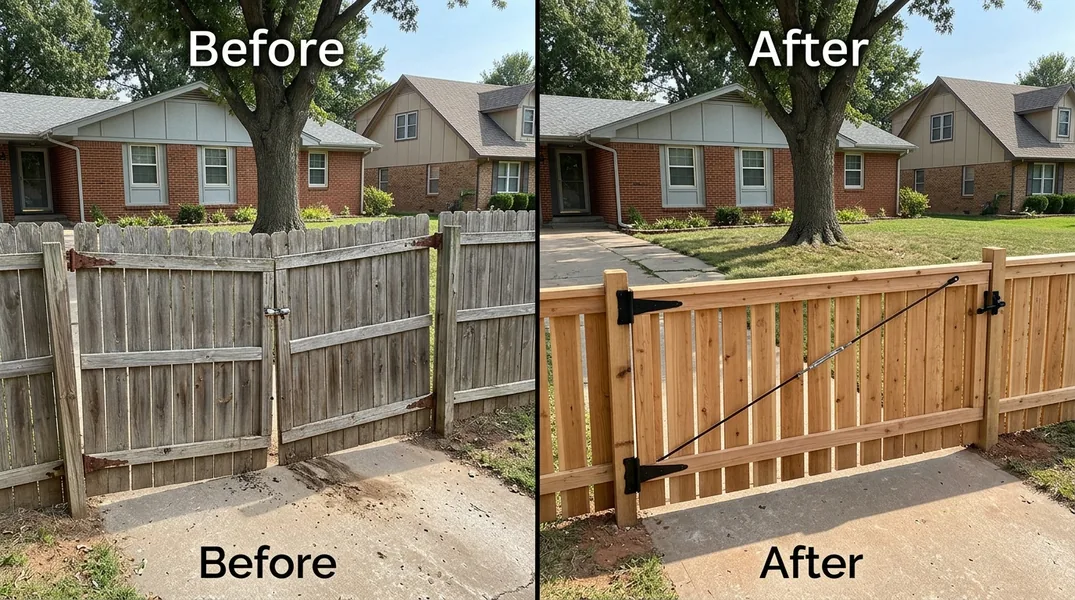
Why Kansas Wind Demands Smarter Fence Design
Wichita sits in a region where wind isn't just a passing breeze, it's a real structural challenge. The plains of Kansas experience regular wind events that can exceed 40 mph, and during severe weather, gusts can top 60 mph or more. When a fence isn't properly engineered for these conditions, the results can be costly: leaning posts, cracked boards, and eventually, a fence blown down that requires expensive repairs or complete replacement.
Most homeowners don't realize that standard fence installation practices may not account for the specific wind pressures common in the Great Plains. A fence that works fine in a sheltered area may fail spectacularly when exposed to open Kansas wind. The good news is that with the right design principles, your Wood & Privacy Fence Installation can stand strong for decades, even when the wind picks up.
Fence Post Spacing and Wind Resistance: Finding the Right Distance
The distance between fence posts is one of the most critical factors in wind resistance. Many residential fences are installed with posts spaced 6 feet apart, which is standard for calm conditions. However, in high-wind areas like Wichita, reducing post spacing to 4 feet or even 4.5 feet can dramatically improve stability. Closer posts mean less unsupported span between anchor points, which reduces the amount the fence can flex and move when wind pressure builds up.
Think of it like a bridge: the shorter the span between support pillars, the less stress each section experiences. When posts are farther apart, the boards between them act like a sail, catching wind and creating leverage that can eventually snap boards or loosen connections. By tightening up your fence post spacing wind resistance, you're essentially creating more anchor points that distribute the force more evenly. This is especially important for taller privacy fences, which have more surface area exposed to wind and therefore experience greater pressure.
The trade-off is that closer spacing uses more materials and labor, which affects pricing. However, the investment in proper spacing now prevents the much larger expense of repairing or replacing a windproof fence that has failed.
Post Depth: How Deep Is Deep Enough for Wind Stability
Just as important as spacing is how deep your fence posts go into the ground. Posts that are set too shallow will act like a lever, rotating in the soil when wind pushes against the fence. A common rule of thumb is to set posts at least one-third of the total post height into the ground, but for wind-prone areas, many professionals recommend closer to 40 percent. For a 6-foot privacy fence, this means burying the post at least 2.5 feet deep, and ideally 2.5 to 3 feet.
The soil type matters too. In areas with loose or sandy soil, deeper burial becomes even more critical because the soil provides less lateral support. Kansas soils vary by location, but many areas have clay or mixed soil that can provide good support if the post is set deep enough. Using concrete to set your posts is essential, not optional. A post simply driven into bare soil or set in loose gravel will shift and settle over time, especially after freeze-thaw cycles that are common in Kansas winters. Concrete creates a rigid anchor that resists rotation and movement, which is why professional installation always includes proper concrete footings.
Board Layout and Orientation: Solid vs. Spaced Designs
The way you arrange the boards on your fence has a direct impact on how much wind resistance you get. A solid privacy fence with boards running vertically and installed with no gaps between them acts as a full sail when wind hits it. While this creates maximum privacy, it also creates maximum wind pressure. Some wind actually passes through the fence if there are small gaps or if the boards are slightly warped, which can reduce strain. A completely solid fence with boards installed too tightly can actually become more vulnerable to failure because all the wind force concentrates on the structural system without any relief.
One solution is to install boards with a small intentional gap, typically one-quarter to one-half inch between each board. This allows some wind to pass through while still maintaining privacy, because the eye can't see through such a small gap from a normal viewing distance. This design reduces wind pressure significantly while keeping the aesthetic benefits of a privacy fence. Alternatively, some homeowners choose a board-on-board or shadow box design, where boards alternate on each side of the rails, creating a more open structure that naturally allows wind to flow through while still blocking views.
For maximum wind resistance in a solid design, ensure boards are installed vertically (not horizontally) and that they're securely fastened with stainless steel fasteners that won't rust or weaken over time. Horizontal boards catch wind differently and are more prone to bowing under pressure.
Materials That Survive Kansas Weather: Wood Selection Matters
The type of wood you choose for your fence affects both its wind resistance and its longevity. Pressure-treated lumber is the standard for fence posts because it resists rot and decay from moisture, which weakens wood over time. For fence boards, pressure-treated wood is also recommended, though some homeowners prefer cedar or other hardwoods for appearance. Hardwoods like cedar are naturally more resistant to rot but are also more expensive and still require regular maintenance to prevent weathering.
Wood that's been compromised by rot, insect damage, or weathering becomes brittle and weak. A board that looks fine on the surface might be soft inside, making it vulnerable to cracking or splitting when wind pressure increases. This is why regular maintenance, including staining or sealing every few years, isn't just about appearance, it's about structural integrity. If you're installing a new fence or repairing an old one, using quality, properly graded lumber makes a real difference in how well your fence handles Kansas wind.
If you want a fence that requires minimal maintenance and offers superior wind resistance, Vinyl & PVC Fence Installation is worth considering. Vinyl doesn't rot, crack, or weaken over time like wood does, and it can be engineered with the same spacing and depth principles for excellent wind performance.
When to Call a Professional: Wind-Resistant Fence Installation Near Me
Building a windproof fence that truly survives Kansas wind requires knowledge of local conditions, proper engineering, and skilled installation. While some homeowners attempt DIY fence projects, the stakes are high when wind resistance is critical. An improperly installed fence doesn't just look bad, it becomes a liability that can fail suddenly and potentially damage neighboring properties or cause injury.
A professional fence company like Wichita Fence Company understands the specific challenges of building in Kansas. We know the soil conditions in different parts of the area, we understand local wind patterns, and we have the experience to design a fence that balances aesthetics with structural integrity. Whether you're building a new privacy fence or reinforcing an existing one that's showing signs of wind damage, getting a professional assessment is the smart move.
If you're concerned about your current fence or ready to install a new one that can handle Kansas weather, contact Wichita Fence Company for a free estimate. You can also reach us at (316) 710-7662 to discuss your specific situation and get expert recommendations tailored to your property and local conditions.
Looking for a professional tree service in Wichita? Wichita Fence Company responds fast for all your fence needs.
Get a Free Quote